You’ve Been Dreaming About Your Custom Home. So… How Do You Actually Make It Happen?
Maybe you’ve been picturing it for years.
The kitchen with the oversized island where everyone gathers. A front porch you can actually sit on. A primary suite that feels like a retreat. A backyard designed for the way you live. A specific neighborhood - or maybe a few acres where you can finally have some space.
And every time you tour homes for sale, you find yourself thinking:
“I like this, but I would change that.”
Maybe you haven’t found your dream home because it hasn’t been built yet.
For buyers who have a clear vision of what they want, building a custom home can be an incredible opportunity. But the process can also feel overwhelming. Where do you start? Do you find the land first? Do you need a builder? An architect? A lender? And how do you know what you can actually afford before the home even exists?
The good news? You don't have to figure it all out on your own.
Here’s what the custom home-building process typically looks like.
Step 1: Start With the Dream - But Get Specific
Before you start looking at land or interviewing builders, spend some time thinking about how you want your home to function.
Of course, you can create Pinterest boards and save beautiful kitchens. But go beyond aesthetics.
Ask yourself:
- How many bedrooms and bathrooms do we need?
- What do we love about our current home?
- What doesn't work for us?
- Do we need a home office?
- Do we entertain often?
- Do we want a large yard, a pool, a screened porch, or outdoor living space?
- Is a walkable location important?
- Would we rather have a larger home or a larger lot?
- What are our absolute must-haves?
- What would be nice, but isn't essential?
Your vision will evolve throughout the process, but having a starting point helps you make better decisions from the beginning.
And remember: your dream home should be designed around your life - not just what looks good in a photo.
Step 2: Understand Your Budget
This is one of the most important steps, and it's also where many people get surprised.
When you're building a custom home, the cost is about much more than the house itself.
Your overall budget may include:
- The land
- Site preparation and clearing
- Grading and drainage
- Architectural or design fees
- Engineering
- Permits
- Utility connections
- Water, sewer, well, or septic
- Construction costs
- Builder fees
- Landscaping
- Driveways and outdoor features
- Financing costs
- A contingency for unexpected expenses
The actual home construction cost is only one part of the picture.
Before you start shopping for a lot, I recommend speaking with a lender who understands construction financing. This helps you determine your realistic budget and understand how land costs and construction costs work together.
Step 3: Assemble the Right Team
One of the biggest questions buyers ask is: Who comes first - the builder, the architect, or the land?
The answer is: it depends.
There are a few different ways to build a custom home.
You might:
- Find the land first and then choose a builder
- Choose a builder who helps you find the right lot
- Work with an architect to design the home before finding the land
- Work with a design-build company that handles both design and construction
But regardless of the path you choose, your team will likely include some combination of:
A Real Estate Agent
This is where I can help. Finding the right piece of land is a real estate transaction—and it's important to have someone representing your interests during the search and purchase process.
A Custom Home Builder
Your builder manages the construction process and can be an incredibly valuable resource when evaluating land, estimating costs, understanding feasibility, and developing your plans.
An Architect or Designer
For a fully custom home, an architect or residential designer can help translate your ideas into an actual home.
A Construction Lender
Construction financing works differently than a traditional mortgage. A lender who understands custom home construction can explain your options and help you understand what needs to be in place before the project begins.
Depending on your project, you may also work with engineers, surveyors, attorneys, and other professionals.
Building a custom home is a team effort.
Step 4: Find the Right Piece of Land
Finding land might be the most exciting part of the process - but it is also where you want to be especially careful.
A beautiful piece of property does not automatically mean it is easy or affordable to build on.
Before purchasing a lot, you want to understand:
- Zoning and land-use restrictions
- Setbacks
- HOA rules or architectural requirements
- Easements
- Utility availability
- Whether the property has access to water and sewer - or requires a well and septic system
- Topography and drainage
- Soil conditions
- Floodplain considerations
- Access to the property
- The overall cost of preparing the site
The lot itself can directly affect the design of your home and your overall budget.
A steep lot might require additional grading or retaining walls. A rural property may need a well, septic system, or a long driveway. An infill lot may have setback restrictions that affect the size and placement of the home.
This is why I would never recommend simply falling in love with a piece of land and purchasing it before doing your homework.
Ideally, your builder should evaluate the lot before you commit to buying it.
Step 5: Design the Home
Now the fun really begins.
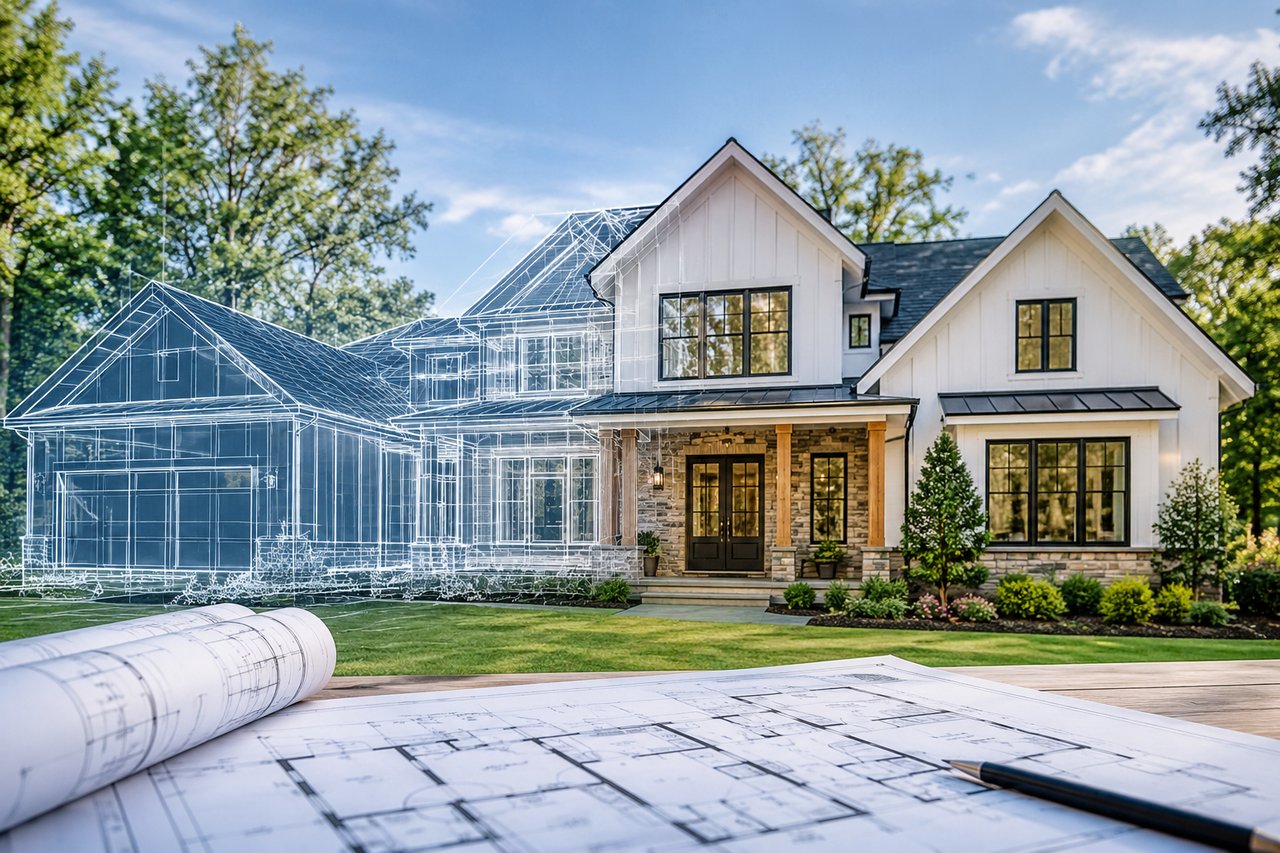
This is where your ideas start becoming actual floor plans.
Depending on your project, you may start from a completely blank slate - or you may begin with an existing floor plan and customize it.
You’ll think about:
- The overall layout
- Room sizes
- Bedroom locations
- Ceiling heights
- Windows and natural light
- Storage
- Kitchen layout
- Outdoor living
- Garages
- Home offices
- Future needs
- Architectural style
This is also when you want to think about how the home sits on the lot.
Where does the sun rise and set? What views do you want to take advantage of? Where should the driveway go? Which direction should your main outdoor living space face?
A truly custom home isn't just about selecting finishes.
It's about designing the entire home around the property and the way you live.
Step 6: Finalize Your Plans and Pricing
Once your design is developed, your builder can work with the plans to create a more detailed construction budget.
This is where you need to pay close attention to what is actually included.
Some elements may have fixed prices, while others are listed as allowances.
For example, your contract may include an allowance for:
- Lighting
- Tile
- Appliances
- Plumbing fixtures
- Cabinet hardware
- Countertops
If you choose finishes that exceed those allowances, the cost of the project can increase.
This doesn't mean allowances are bad - it just means you should understand them.
The more decisions you make and finalize before construction begins, the more clarity you will have around the budget.
I also recommend building some room into your budget for unexpected expenses and changes. Even the best-planned construction projects can encounter surprises. Many custom-home guides recommend planning a contingency rather than assuming everything will go exactly according to the original estimate. (Raleigh New Builds)
Step 7: Secure Construction Financing
Construction financing is different from buying an existing home.
Instead of receiving the full loan amount all at once, the lender typically releases funds in stages - often called draws - as different phases of construction are completed.
Depending on the loan structure, the construction loan may later convert into a traditional long-term mortgage once the home is complete. The details vary by lender and loan program, so this is something you'll want to discuss with a qualified construction lender early in the process. (Tim M. Clarke)
Your lender may need to review:
- The construction plans
- The builder's contract
- The project budget
- The construction timeline
- The value of the land
- Your financial information
This is another reason to start conversations with a lender earlier rather than later.
Step 8: Permits, Approvals, and Pre-Construction
Before construction can begin, there is usually a period of behind-the-scenes work.
This may include:
- Finalizing construction documents
- Engineering
- Permitting
- HOA or architectural review
- Site planning
- Utility coordination
- Surveys
The exact process varies depending on where you are building and the type of property you choose.
You may not see a lot happening on-site yet, but plenty is happening in the background to prepare for construction.
Step 9: Break Ground
Finally!
Construction typically moves through several major stages:
- Site preparation and foundation
- Framing
- Roofing and exterior work
- Electrical, plumbing, and HVAC
- Insulation and drywall
- Cabinets, flooring, and finishes
- Fixtures and final details
- Final inspections and walkthroughs
Depending on your builder and contract, you'll also be making decisions throughout construction.
This is one of the reasons custom homes take time. You are not simply waiting for a house to be built.
You're participating in the creation of a home.
Step 10: The Final Walkthrough and Move-In
As construction comes to an end, your builder will complete the final items and required inspections.
You'll walk through the home, review how everything works, and identify any final items that need to be addressed.
And then comes the best part:
You move into a home that you helped create.
How Long Does It Take to Build a Custom Home?
There is no one-size-fits-all answer.
The timeline depends on:
- The complexity of the home
- The property
- The design process
- Permitting
- Weather
- Material availability
- The builder's schedule
- Changes made during construction
Planning and design can take months before construction begins, and the overall process can easily extend well beyond a year. The key is to go into the process with realistic expectations and understand that building a truly custom home is very different from buying an existing house. (Raleigh New Builds)
So, Where Do You Start?
If you've been picturing your dream home for years but have no idea how to actually make it happen, you don't need to have everything figured out before starting the conversation.
You don't need to already own land.
You don't need to have blueprints.
You don't need to know which builder you're going to use.
The first step is simply understanding your options.
We can talk about your vision, the areas you're considering, your budget, and what the path to building might look like. From there, we can begin putting the right team together and taking the process one step at a time.
Because maybe the reason you haven't found your dream home is because it hasn't been built yet.
Ready to start exploring the possibility of building a custom home in the Triangle? Let's talk.